Gisela Albrecht · 26 September 2026
Shifts in Audience Loyalty Patterns for Niche Digital Tools After Infrastructure Realignments
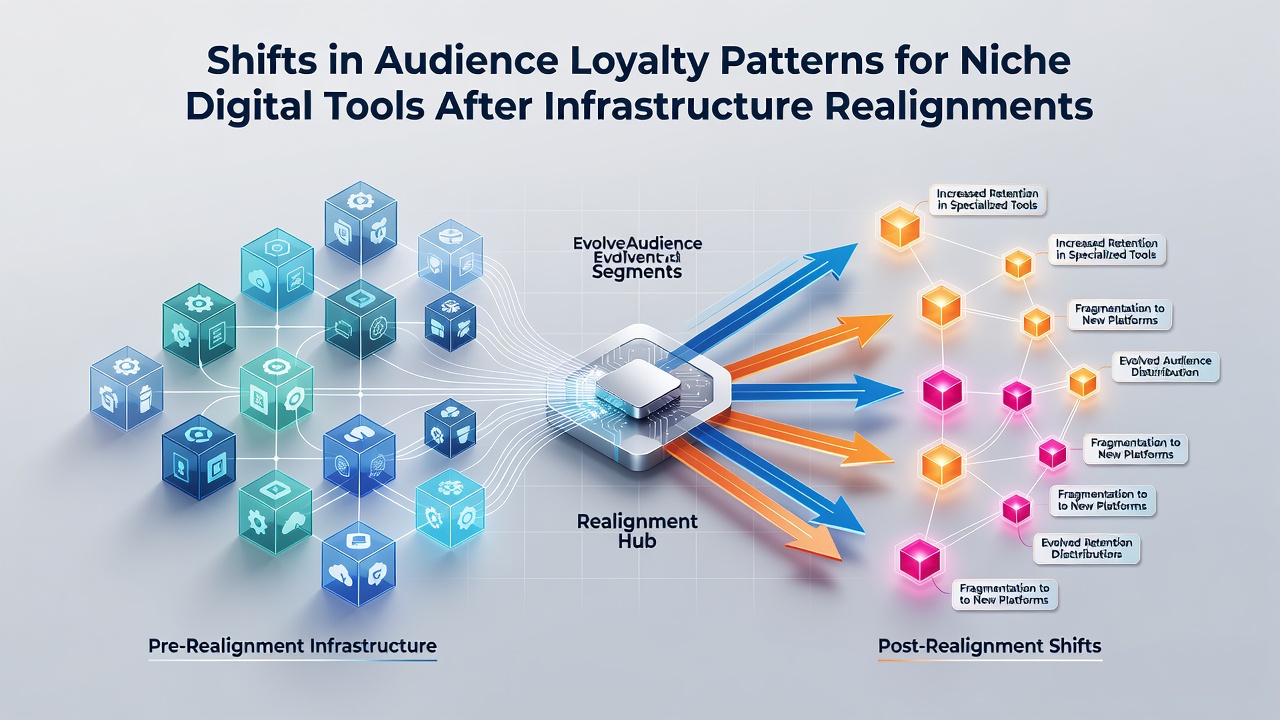
Digital tools that serve specialized markets often undergo infrastructure realignments when providers update servers, migrate to new cloud environments, or overhaul backend systems, and these changes frequently coincide with measurable shifts in how users maintain or alter their engagement levels over time. Data from industry tracking shows that loyalty patterns evolve as audiences respond to performance variations, feature stability, and perceived reliability during transition periods.
Defining Infrastructure Realignments in Specialized Platforms
Realignments typically involve moving data centers, adopting new hosting architectures, or integrating updated APIs, processes that alter the technical foundation without necessarily changing the user-facing interface right away. Researchers at academic institutions have documented cases where such adjustments lead to temporary disruptions in access speeds or data synchronization, prompting users of niche tools to evaluate whether continued reliance remains worthwhile. Studies indicate that tools focused on project management for creative professionals or analytics for small research teams experience these effects more acutely because their audiences often operate with limited alternatives and tight workflow dependencies.
Patterns of Engagement Following System Updates
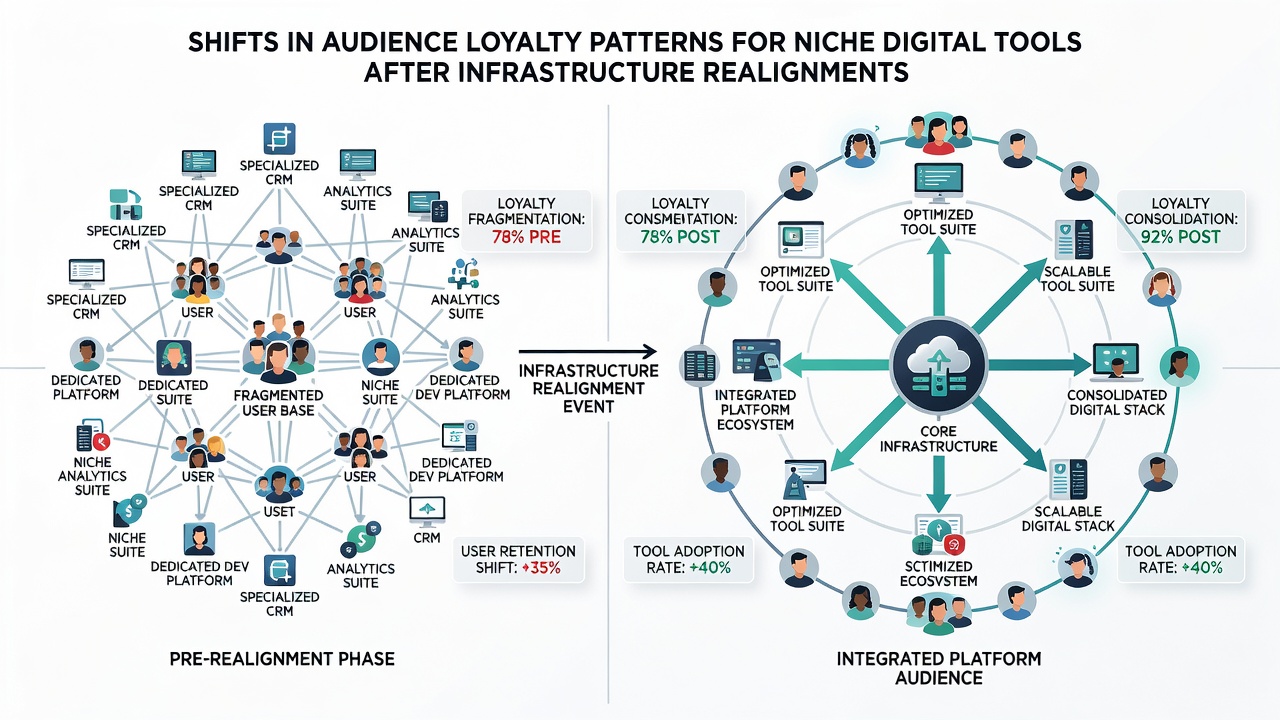
After realignments take place, retention rates for niche digital tools show distinct variations according to timing and execution quality. Reports compiled in September 2026 reveal that platforms completing migrations with minimal downtime retained higher percentages of active users compared to those encountering extended outages, with figures indicating drops of up to 18 percent in monthly active accounts when delays exceeded three days. Observers note that audiences for these specialized applications tend to monitor update announcements closely, and many cross-reference performance benchmarks shared in professional forums before deciding whether to maintain subscriptions or explore competing options.
One analysis of usage logs demonstrated that loyalty metrics stabilized within four to six weeks when providers communicated clearly about maintenance schedules, whereas incomplete information correlated with accelerated churn among long-term subscribers. The European Commission has published digital economy overviews that highlight similar trends across software categories, noting how backend changes influence user trust in tools that handle sensitive workflow data.
Key Drivers Behind Audience Behavior Changes
Several measurable factors contribute to shifts in loyalty once infrastructure adjustments occur. Performance consistency ranks high among reported concerns, as users of niche tools often rely on uninterrupted access for time-sensitive tasks, and any degradation prompts immediate comparisons with alternative services. Security protocol updates during realignments can either reinforce or undermine confidence, depending on whether new measures align with industry standards published by bodies such as the Australian Competition and Consumer Commission.
Cost structures also play a documented role, since some providers adjust pricing to offset infrastructure expenses, leading segments of the audience to reassess value propositions. Data compiled by research organizations shows that users who experienced prior positive support interactions during earlier updates displayed greater tolerance for temporary issues, while those without such history switched platforms at higher rates. Community discussions tracked across specialized forums further indicate that word-of-mouth recommendations accelerate when realignments introduce unexpected benefits like faster processing speeds or expanded integration options.
Comparative Outcomes Across Tool Categories
Tools designed for narrow professional fields exhibit different loyalty trajectories than broader consumer applications after similar infrastructure events. For instance, analytics platforms serving environmental researchers demonstrated steadier retention when realignments improved data processing capacity, according to aggregated usage statistics. In contrast, design collaboration tools saw more pronounced audience redistribution toward competitors when migration timelines extended beyond initial projections. These variations underscore how audience expectations tied to specific use cases shape responses, with professionals in regulated industries often prioritizing compliance continuity over minor convenience gains.
Additional evidence from university-led technology adoption studies points to regional differences, where users in markets with robust digital infrastructure recovered engagement levels faster than those in areas with variable connectivity. Providers that offered migration assistance or temporary feature freezes during transitions recorded lower defection numbers in post-update surveys.
Conclusion
Shifts in audience loyalty for niche digital tools after infrastructure realignments reflect a combination of technical execution, communication practices, and user-specific dependencies. Available data through September 2026 illustrates that outcomes vary by category and preparation level, with measurable impacts on retention appearing within weeks of completed changes. Continued monitoring of these patterns provides insight into how specialized platforms maintain engagement when foundational systems evolve.